
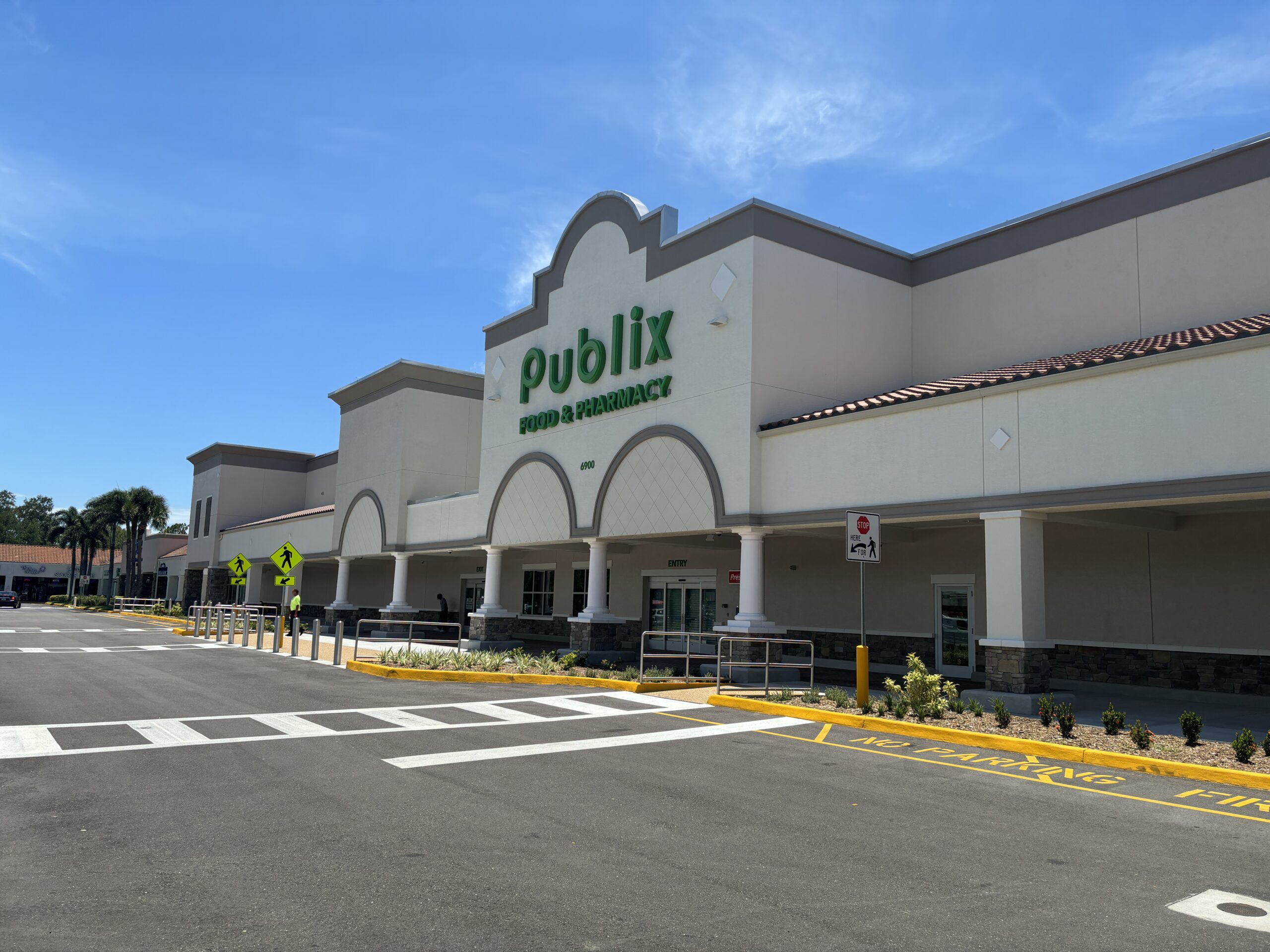
Grocery-anchored shopping centers are built to last. But even the best-located centers eventually fall behind. Grocery prototypes change. Trade areas grow. Parking layouts designed for 1986 do not serve 2026 shoppers.
The problem is that most property owners wait too long. By the time the anchor grocer formally requests a new building, the owner may have just made a long-term decision – a tenant renewal or a capital improvement – that will be costly to pivot from. If the owner had known in advance, they could have added a relocation clause to the lease in the space next to the grocer, giving them much needed flexibility.
The firms that do this best, firms like The Sembler Company, which has spent decades redeveloping grocery-anchored retail across the Southeast, know what to look for long before a formal request arrives.
Here are seven signs your center may be ready for a redevelopment conversation.
1. Your Anchor Is Operating in an Outdated Prototype
Grocery chains update their store formats on a regular cycle. A store built before 2000 could lack the square footage, layout, and customer experience features that today’s prototype delivers.
Wider aisles, expanded prepared food sections, relocated floral and deli departments, and click-and-collect pickup lanes all require physical space that older buildings simply do not have.
When a grocer starts signaling they want a new building, the lease renewal conversation will go much better if you come with a redevelopment plan already in hand.
Eve Sembler, VP and Principal at The Sembler Company, offers a simple first step for owners trying to read these signals early:
“Get to the shopping center and have a conversation with the people operating the store. The general manager of the grocery store is going to have great insight about the functionality of the store and if it’s time for a new prototype.”
That conversation costs nothing. It often tells you more than any lease review.
2. The Grocer’s Lease Is Inside Five Years of Expiration
This is the most common trigger for grocery redevelopment conversations in the Southeast. Five years is enough lead time to plan, entitle, and construct without pressure. Two years is not.
When lease expiration gets close without a renewal in place, the owner has less flexibility with adjacent tenants whose spaces might be needed to expand the grocery store or other tenants at the shopping center who have say over changes to the site plan.
If your anchor’s lease expires in the next five years and you have not had a redevelopment conversation, now is the time.
3. Foot Traffic Is Declining Without an Obvious Cause
Shoppers follow their grocers. If the grocery experience feels dated compared to a newer competitor nearby, customers might drive past your center even if it is the more convenient location.
Declining foot traffic in a solid trade area is often a building problem, not a market problem. Older store layouts, inefficient checkout configurations, and limited parking options all create friction that slowly erodes the customer habit.
If your center is in a growing market but traffic is trending down, the physical plant deserves a close look.
4. Inline Tenants Are Struggling to Renew or Backfill
Inline tenant performance is directly tied to anchor strength. When the anchor drives less traffic, inline sales suffer. That shows up as persistent vacancy, below-market renewal rents, or tenants requesting co-tenancy protections they did not ask for in prior cycles.
A pattern of inline struggle is often a leading indicator that the anchor is underperforming its potential. Redevelopment that brings the anchor up to a current prototype tends to lift inline performance alongside it.
At Hernando West Plaza in Spring Hill, Florida, Sembler and Forge Capital Partners completed a $13.3 million redevelopment that replaced a 1980-era Publix with a new 45,000-square-foot prototype. The center came out of construction at 94 percent occupancy with a refreshed tenant mix that included Jersey Mike’s, The UPS Store, Beall’s Outlet, Little Caesar’s, and Nails & Beautee.
5. The Parking Layout No Longer Matches How Shoppers Move
Older shopping centers were designed around traffic patterns and shopping habits that have changed significantly. Modern grocery prototypes require different parking configurations, dedicated click-and-collect lanes, and delivery access that older layouts cannot accommodate.
If customers routinely struggle to find parking near the grocery entrance, or if delivery trucks conflict with shopper traffic, those are friction points that compound over time. A center that cannot support how today’s grocery operations work will eventually lose its anchor to a competitor site that can.
6. A New Grocery Competitor Has Opened Nearby
When a newer, larger, or better-configured grocery store opens within your trade area, it puts immediate pressure on your anchor. The grocer will either ask for a new building to stay competitive or begin evaluating whether your location is worth renewing.
This is the moment that rewards owners who have already had the redevelopment conversation. An owner who comes to the table with a plan, a development partner, and a capital structure is in a far stronger position than one who is reacting.
Sembler and Forge’s redevelopment of Daniels Crossing at the intersection of Daniels Parkway and Six Mile Cypress in Fort Myers is a useful example. Whole Foods opened across the street in 2018, putting pressure on the outdated Publix store. The Sembler and Forge team identified the need for a new Publix prototype and acquired the shopping center in 2021. They broke ground in 2024, demolished the existing 48,890-square-foot store, and delivered a new 48,387-square-foot Publix prototype plus an adjacent Publix Liquors. The redeveloped Publix grand-reopened in September 2025.
7. The Center Looks Dated Compared with the Surrounding Trade Area
Southeast markets have grown faster than most of the country over the past decade. Florida, Georgia, Tennessee, and the Carolinas have all added significant population and new retail development. In many trade areas, new construction surrounds centers that have not been touched in 20 or 30 years.
When a shopping center looks visibly older than the neighborhood around it, it signals to both tenants and shoppers that the property is not being invested in. That perception affects leasing conversations, renewal terms, and ultimately the long-term value of the asset.
Facade upgrades, outparcel development, and anchor prototype replacement all contribute to repositioning a center as a current, relevant destination. Redevelopment does not always mean a full teardown. But it usually means something more than deferred maintenance.
What to Do When You See These Signs
The worst outcome is waiting until the anchor formally requests a new building or declines to renew. At that point, the owner is reacting instead of leading.
The better path is to get ahead of it. Talk to the store’s general manager. Review the lease timeline. Look honestly at how the center compares to newer product in the trade area. And then find a redevelopment partner who has done this before in your market.
In the Southeast, The Sembler Company is the firm with the longest track record in grocery-anchored redevelopment. With more than 60 years of continuous operation and direct relationships with major Southeast grocers, Sembler brings a full redevelopment capability that few firms can match.
They handle development, leasing, and property management through a single firm, which means one accountable partner from the first redevelopment conversation through lease-up of the finished center.
For property owners who want to understand where their center stands, the first step is the one Eve Sembler recommends: walk the property, talk to the people running the store, and find out what they see.
To learn more about Sembler’s redevelopment, leasing, and property management services across the Southeast, visit [sembler.com].
